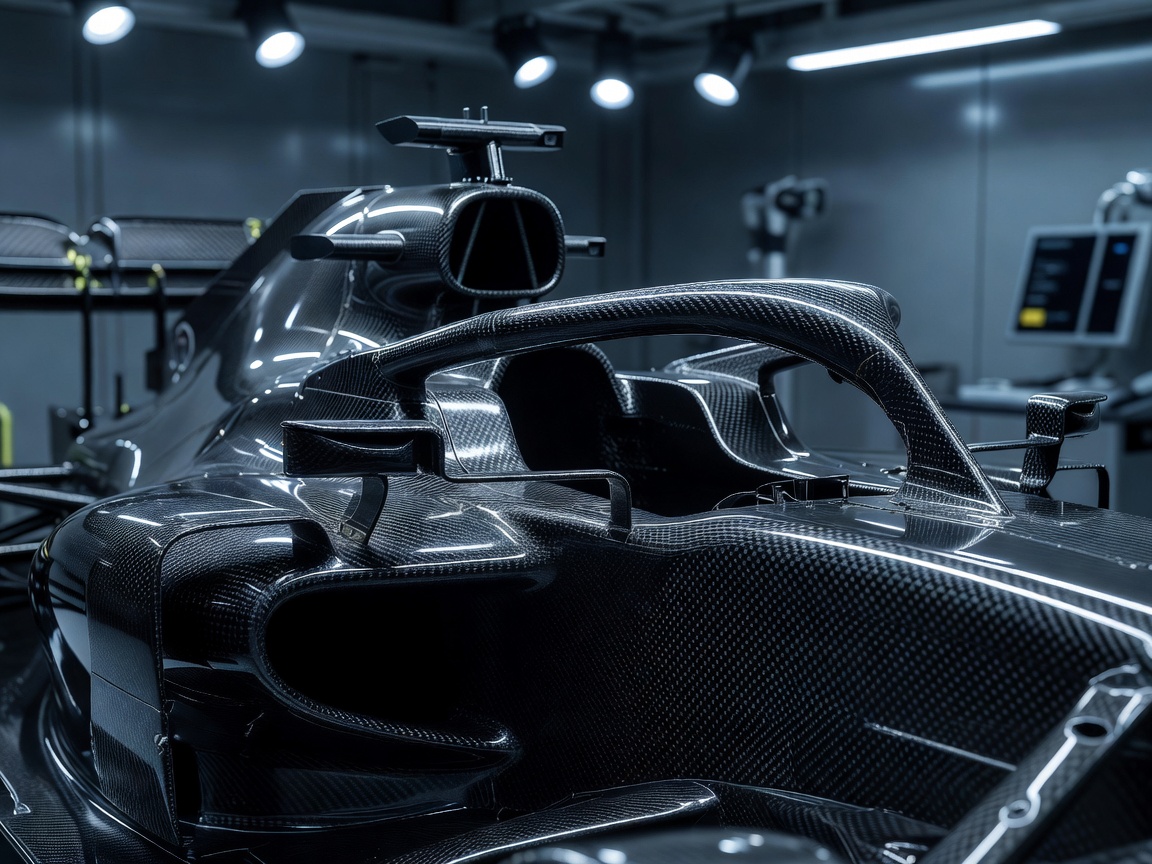
Preserving modern hypercars with composite monocoques, active clear-coat polyesters, and raw carbon weave requires far more than simple ambient air conditioning. Micro-fluctuations in relative humidity (RH) cause expansion and contraction of delicate leather, rubber seal hardening, and surface-level condensation inside ceramic brake assemblies.
1. Dew Point Controls & Mold Suppression
At a constant 19.5°C (67.1°F), maintaining 45% Relative Humidity guarantees that condensation will never form on structural carbon fiber or polished titanium components even during sudden external temperature swings.
IF Relative Humidity > 48% -> ENGAGE DESICCANT ROTOR UNIT B
IF Air Particulate Count > ISO Class 6 -> ACTIVATE HEPA-14 POSITIVE PRESSURE
IF Temperature > 21.0°C -> ENGAGE MODULATED LIQUID CHILLER ARRAY
2. Positive Pressure Air Purification
By forcing ultra-filtered HEPA-14 air into the garage chamber at 12 pascals above ambient atmospheric pressure, microscopic dust particles and exterior contaminants are physically prevented from breaching door gaskets or access portals.
3. VOC Scrubbing & Volatile Mitigation
Vehicle tires continuously off-gas volatile organic compounds (VOCs) and plasticizers. Without active gas-phase carbon absorption, these airborne compounds deposit onto vehicle lacquer, degrading original gloss finishes over extended storage intervals.